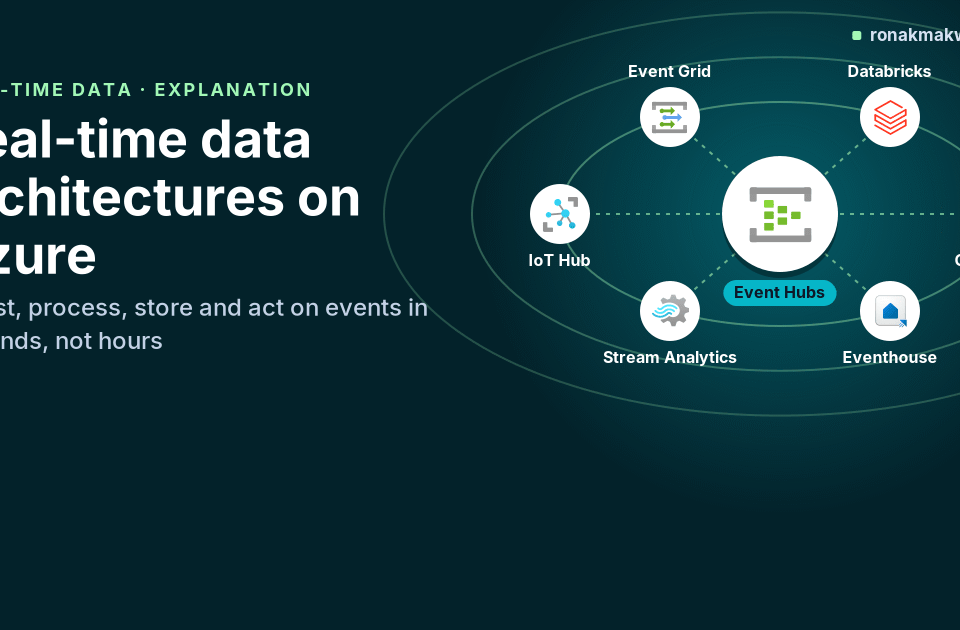
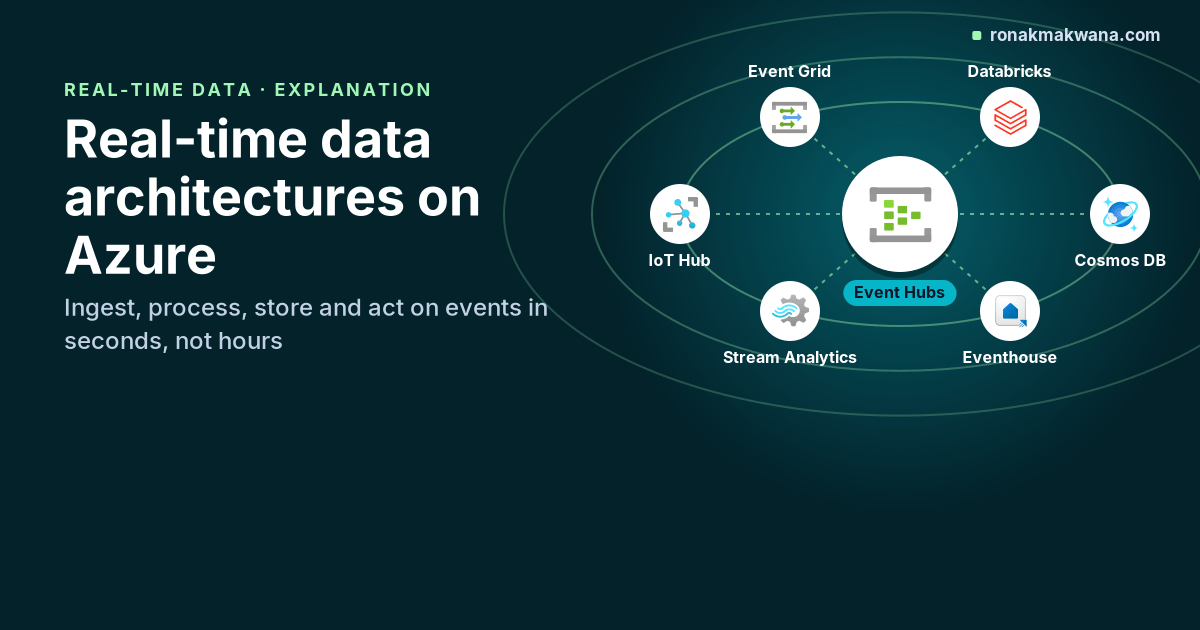
How to design a real-time data platform on Azure: latency tiers, Event Hubs ingestion, choosing Stream Analytics, Databricks, Fabric or Functions, and the decisions on event time, partitions and replay.
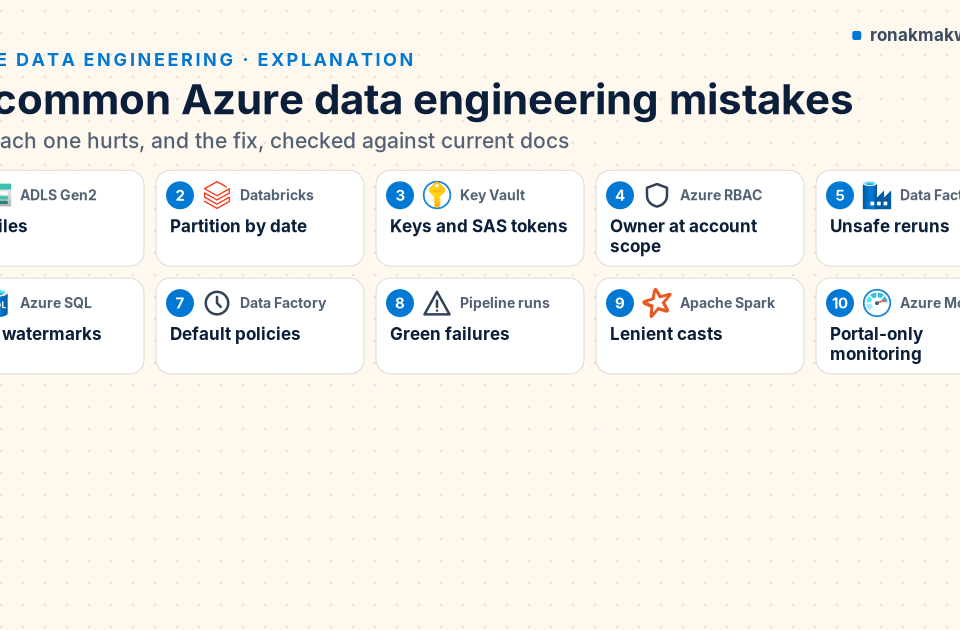
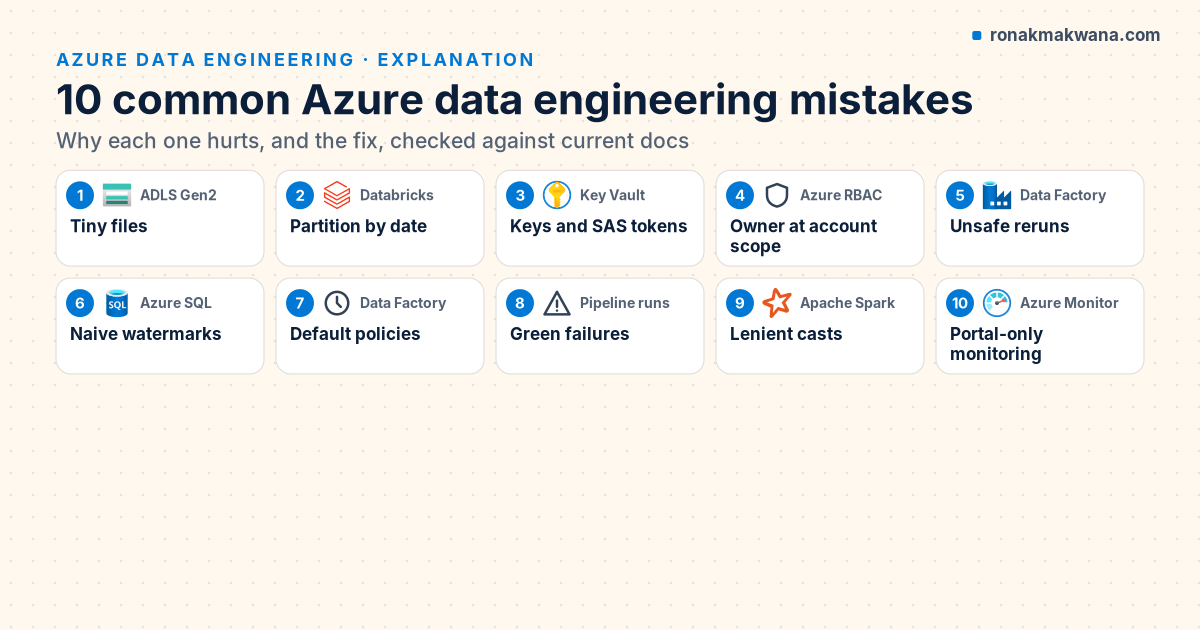
Ten mistakes that make Azure data platforms slow, insecure or unreliable, from tiny files and leaked keys to failure paths that report success, with the fix for each.
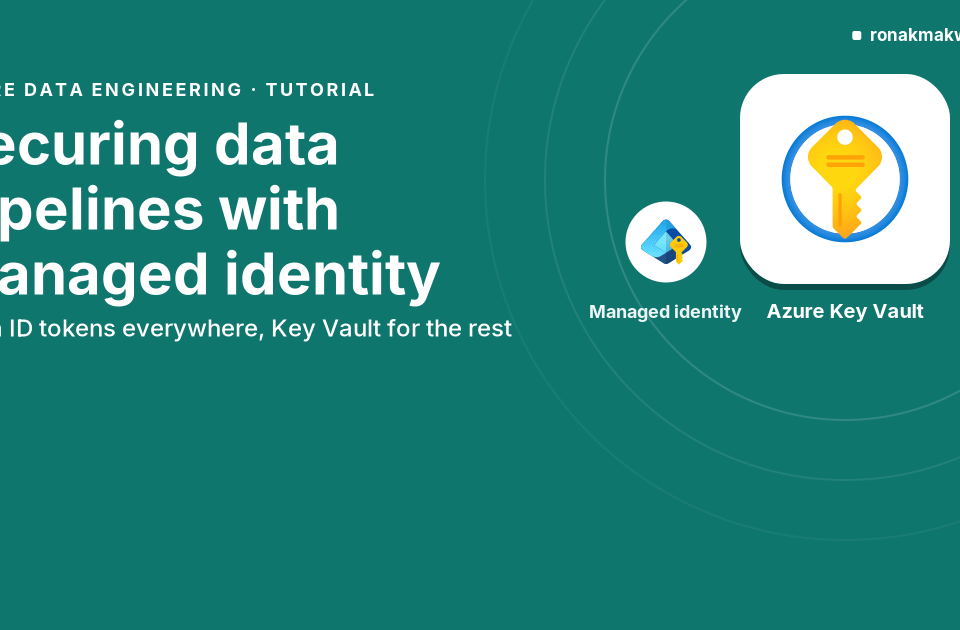
Remove secrets from Azure data pipelines: a user-assigned managed identity with least-privilege roles in Bicep, Entra-only SQL access, Key Vault for what's left, Databricks storage credentials, and audit logging.
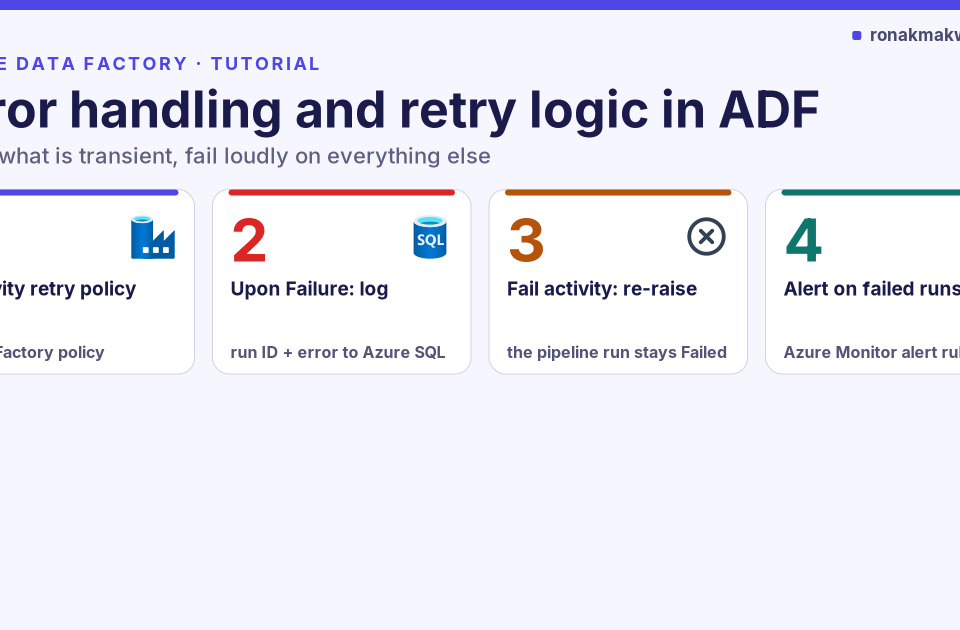
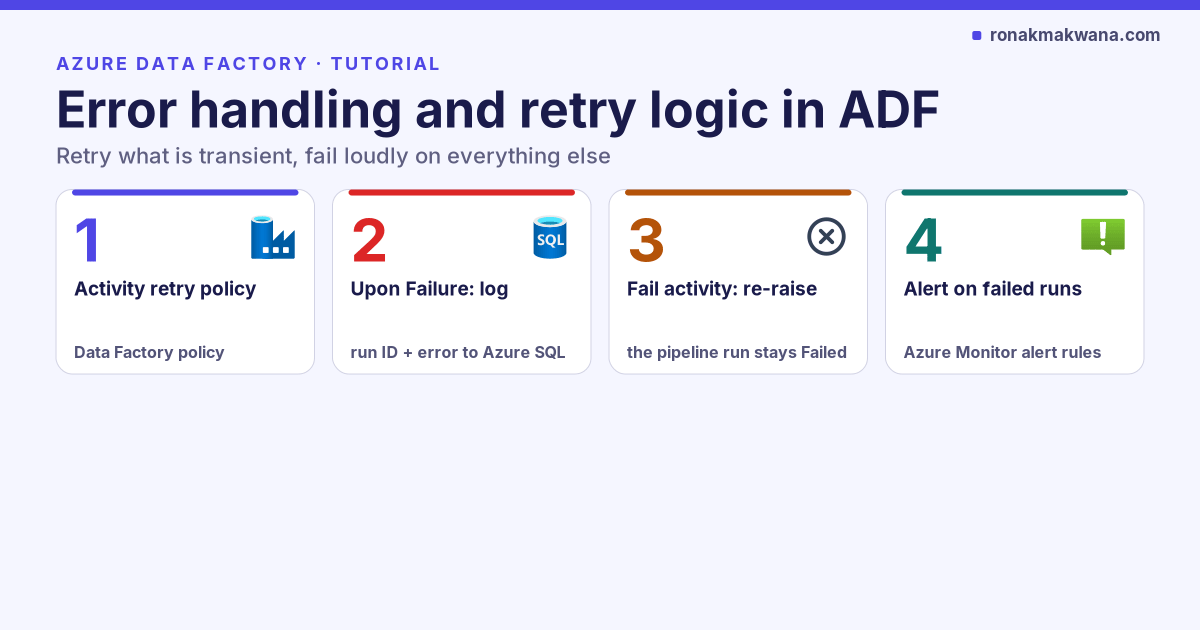
Layered error handling for Azure Data Factory: activity retries for transient faults, how pipeline success is really decided, log-then-fail handlers, Until/Wait polling, trigger retries and reruns.
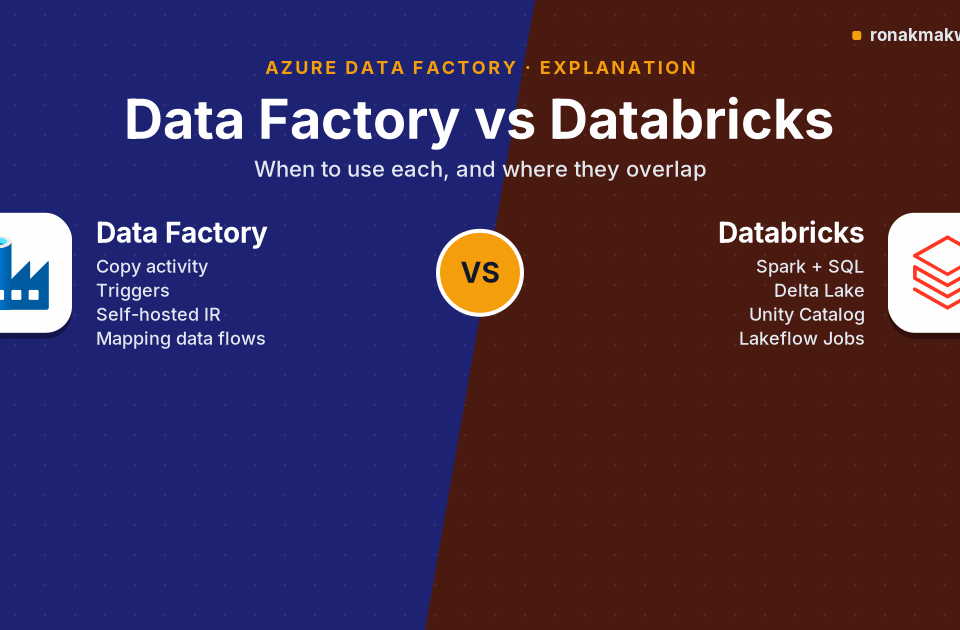
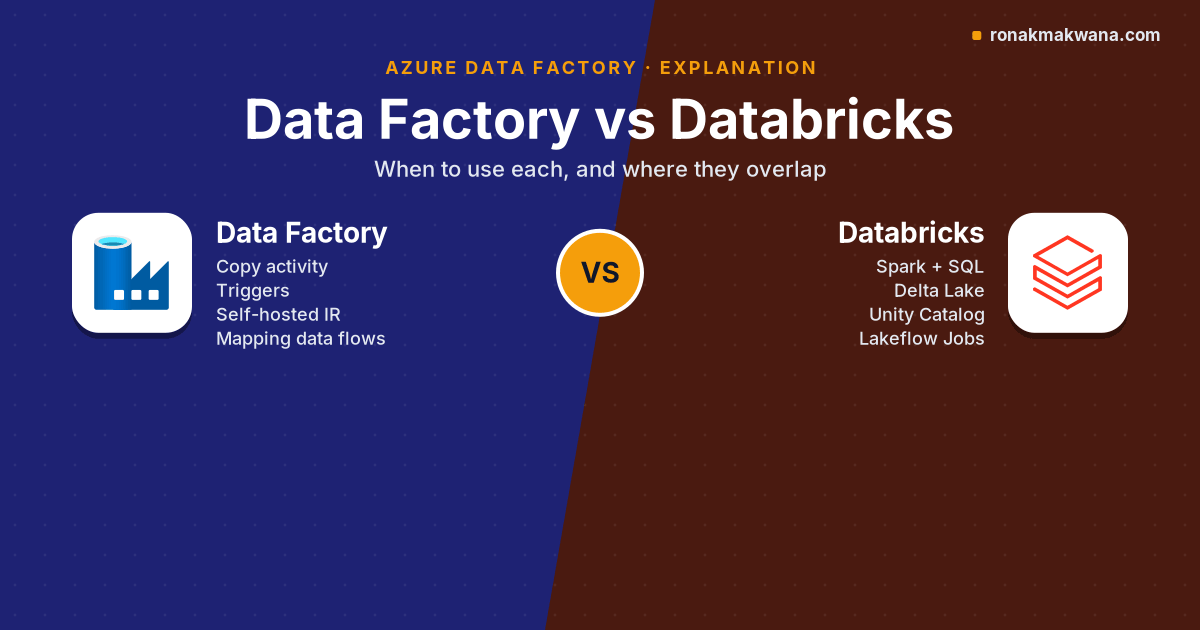
Azure Data Factory and Azure Databricks overlap on ingestion, transformation and orchestration. Here's what each is built for, three common architectures, a decision guide and how their pricing differs.
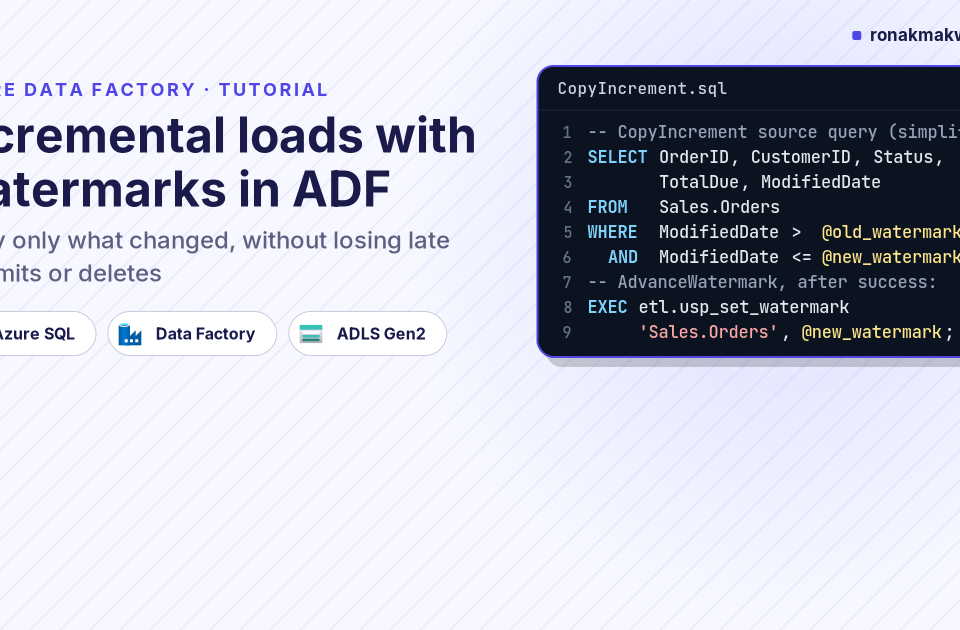
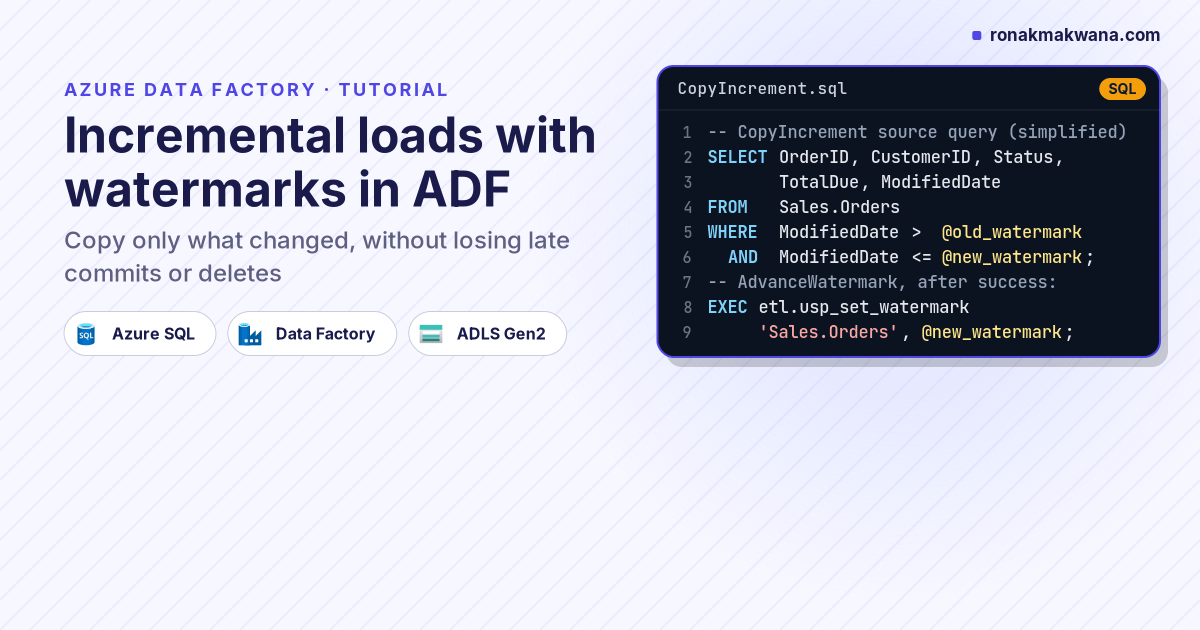
Build a watermark-based incremental load in Azure Data Factory, then close its two silent gaps: transactions that commit late and deleted rows, with overlap windows, rowversion and Change Tracking.
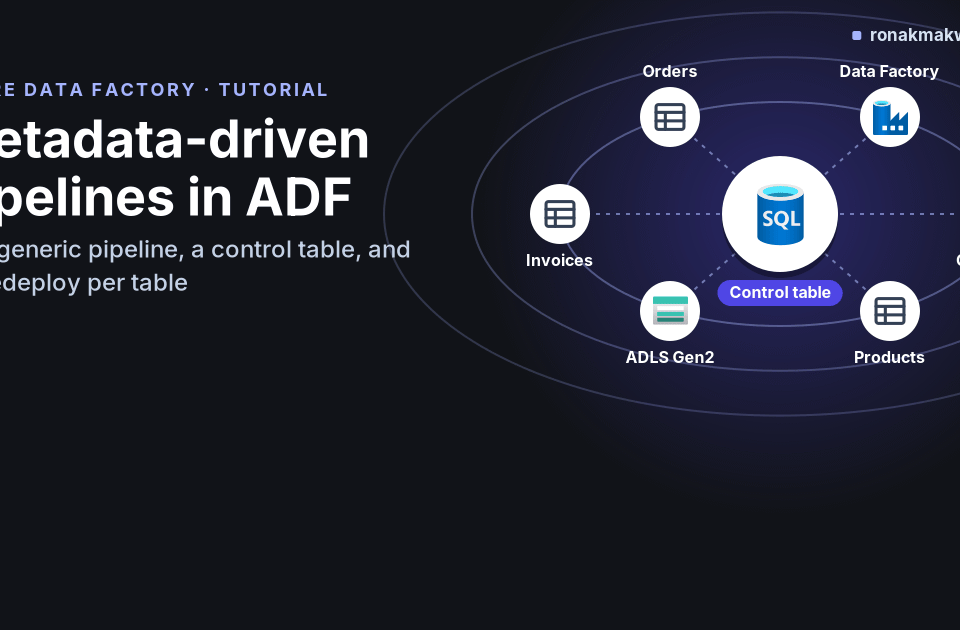
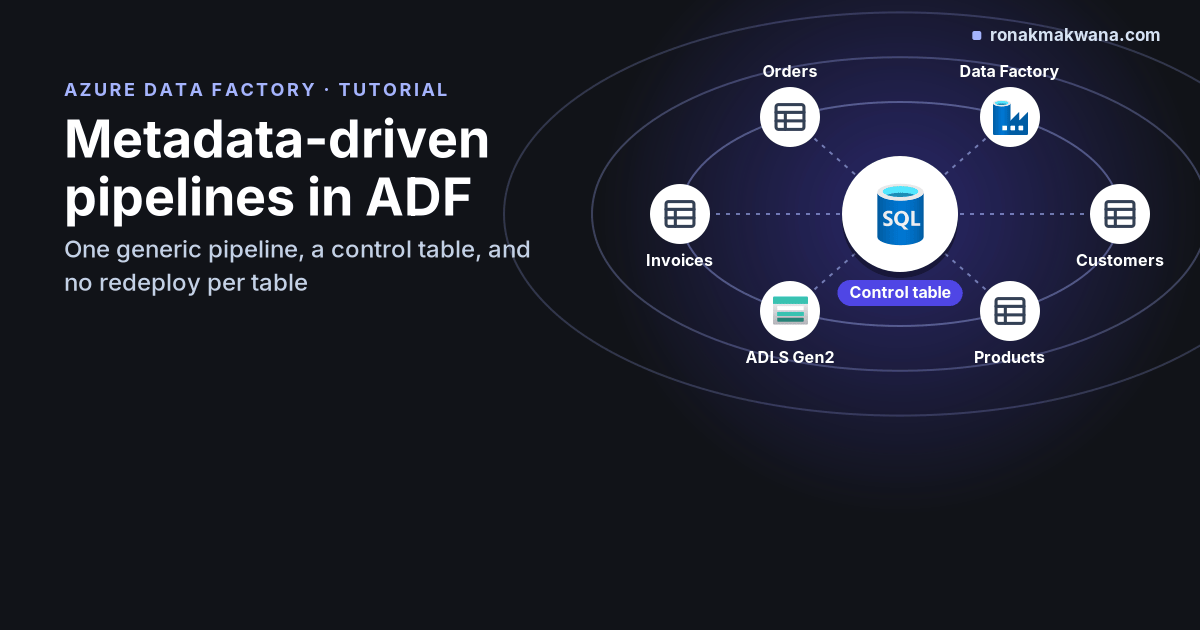
Build a metadata-driven Azure Data Factory pipeline: a control table in Azure SQL, Lookup and ForEach fan-out, a parameterised Copy activity landing Parquet in ADLS Gen2, and per-entity run logging.
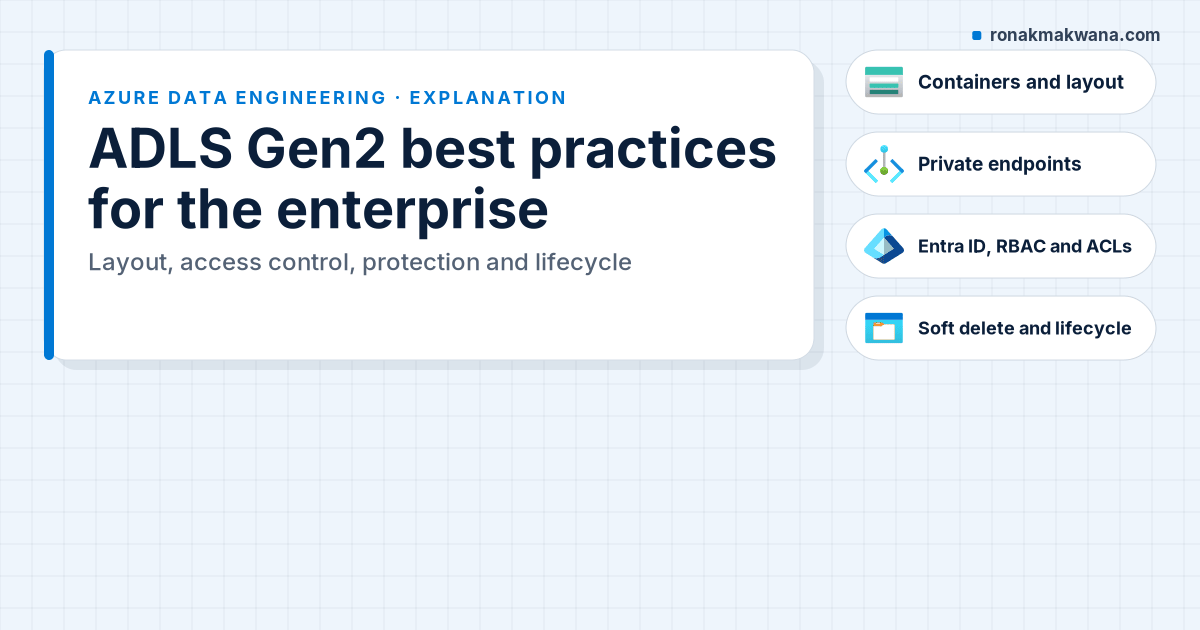
Enterprise practices for Azure Data Lake Storage Gen2: account topology, redundancy, directory layout, file sizing, RBAC versus ACLs, private endpoints, HNS feature support and lifecycle tiering.
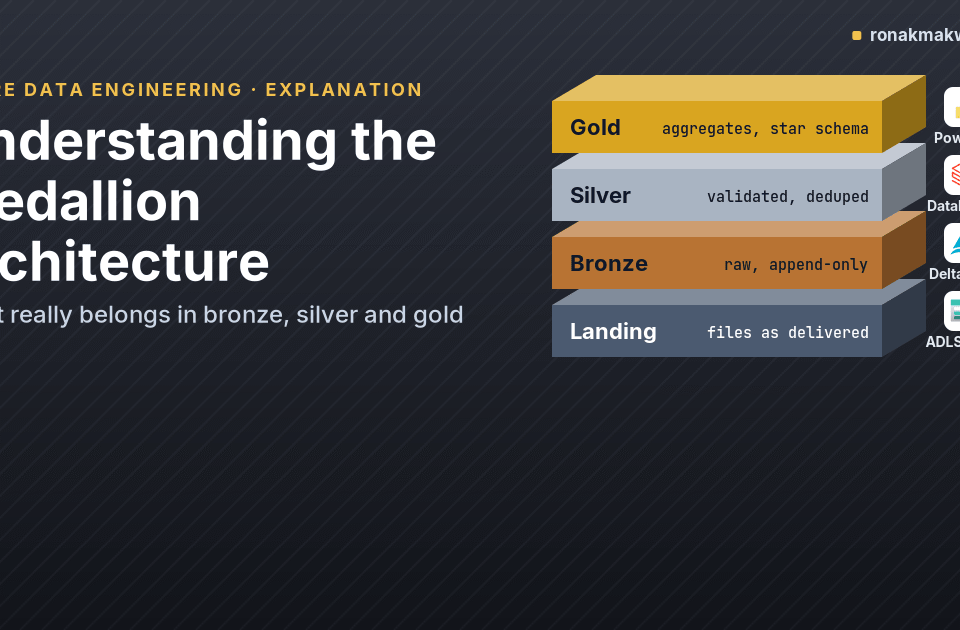
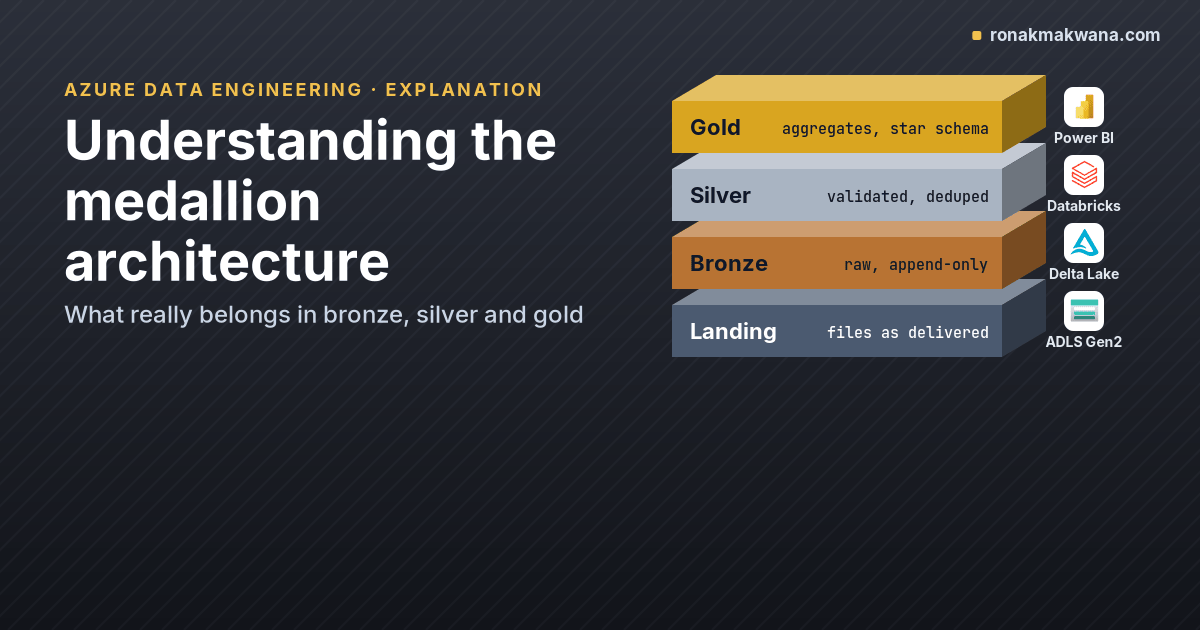
What belongs in the bronze, silver and gold layers of a lakehouse, with a worked PySpark and Delta example, a placement guide for common tasks, and the trade-offs behind how strictly to follow the pattern.